
Eduardo Gutierrez
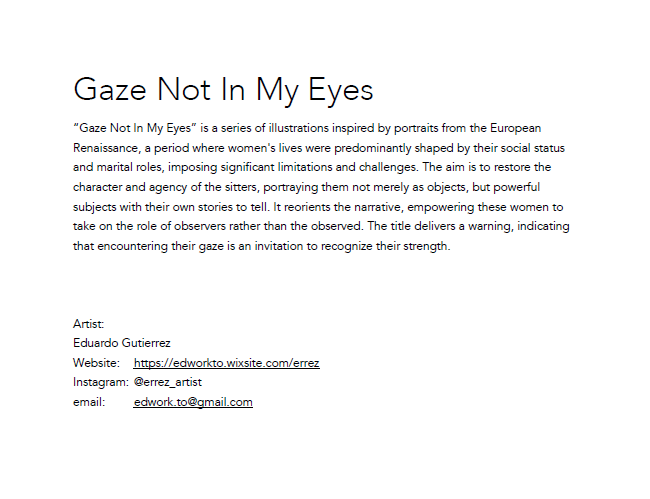
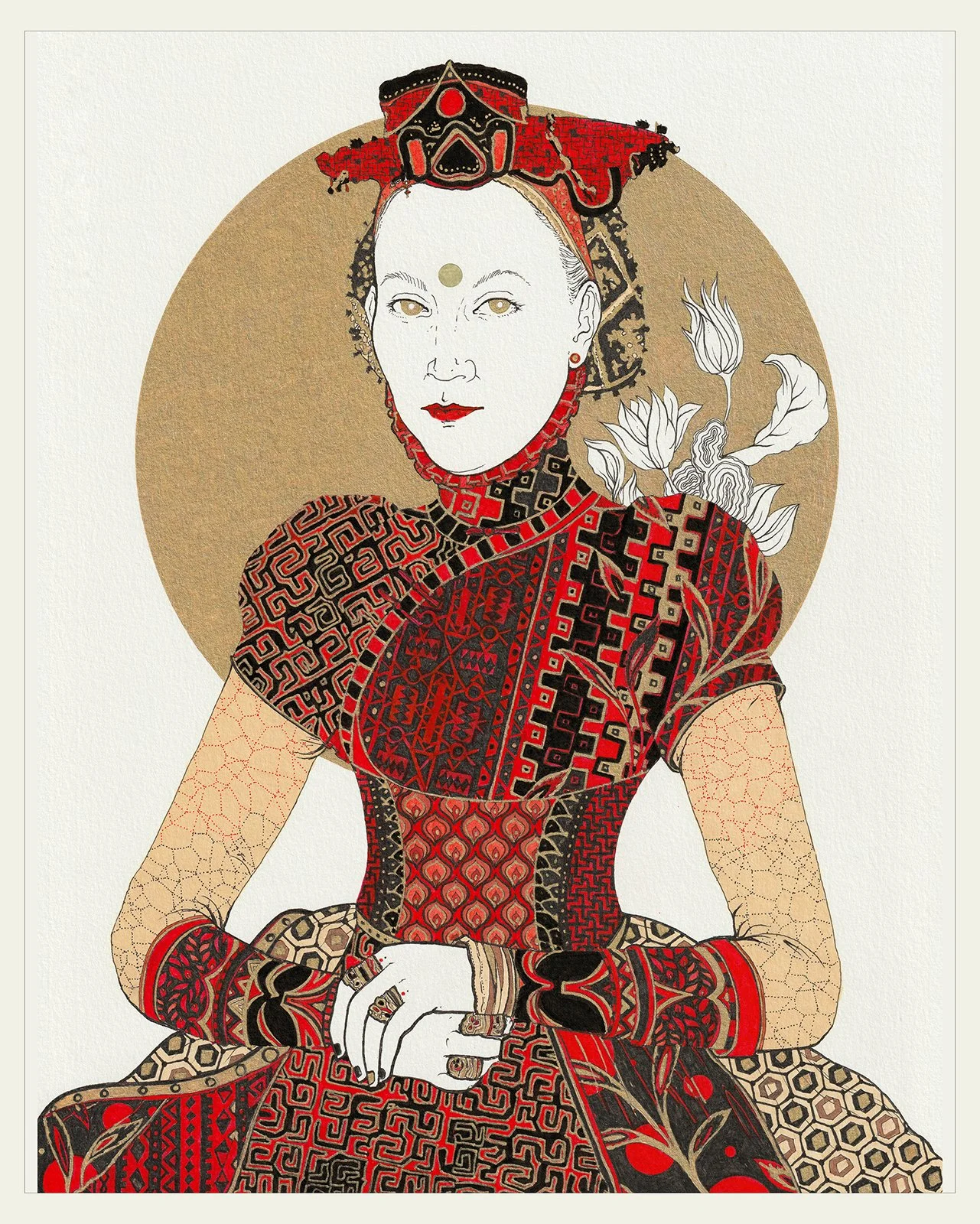
Title: Katharina (After Lucas Cranach the Younger, 1564)
Medium: Fineliners, Markers, Golden ink and stickers on paper
Size: 18 x 12
Price: $240.00
Katharina (from the Greek word 'katharos,' a name that embodies the essence of being physically "spotless," ethically “blameless” and spiritually “clean”), was a distinguished novelist, essayist, and short-story writer, making history as the first woman elected to the most exclusive literary institutions of her era. Leading a nomadic life, her writing captivates readers through deep insights and rich narratives. — [In reality, during the Renaissance, women were often perceived by men as inferior both intellectually and physically, with only a small percentage achieving literacy. Drawing inspired by the “Portrait of a Woman” by Cranach the Younger. The artwork reflects the struggles and silent resilience of women whose identities remain largely unknown].
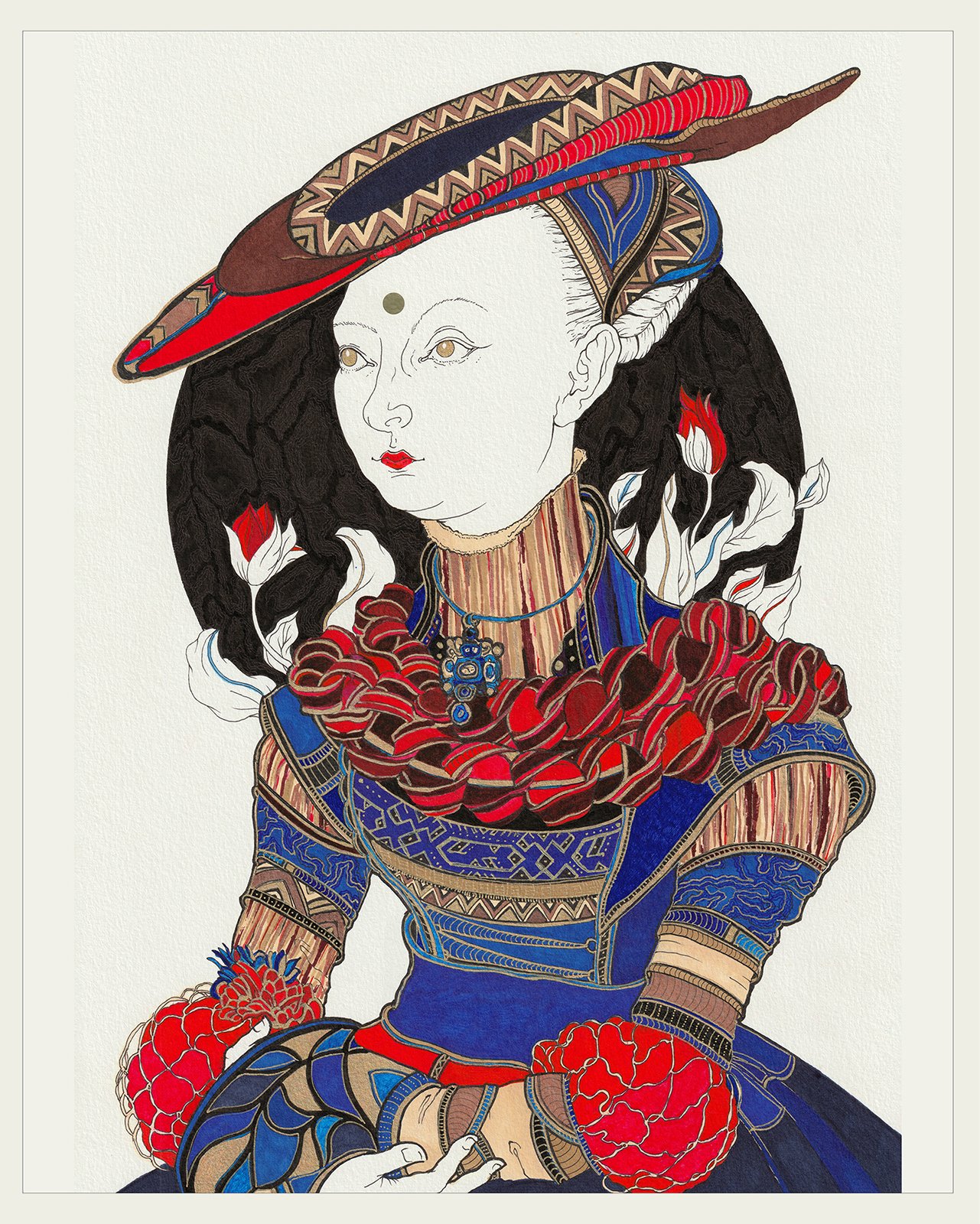
Title: Agnes- After Lucas Cranach the Elder, 1538
Medium: Fineliners, Markers, Golden ink and stickers on paper
Size: 18 x 12
Price: $240.00
Agnes (derived from the Greek word 'hagnḗ,' meaning “pure”, the name symbolizes innocence and virtue), showed her adventurous spirit from a young age. Known for her bravery and strength—qualities often attributed to men, she received a high-quality humanist education which equipped her with the knowledge and skills to navigate the complexities of her time. Instead of marrying, she chose a path of diplomatic expeditions. — [In reality, during the Renaissance, women had almost no legal power and were rarely seen or heard in public. Society expected them to fulfill household duties, limiting their roles to the private. This environment stifled the potential of many women, confining them to traditional roles despite their capabilities. Drawing inspired by “Portrait of a Young Lady holding a Finger Fern”, by Lucas Cranach the Elder].
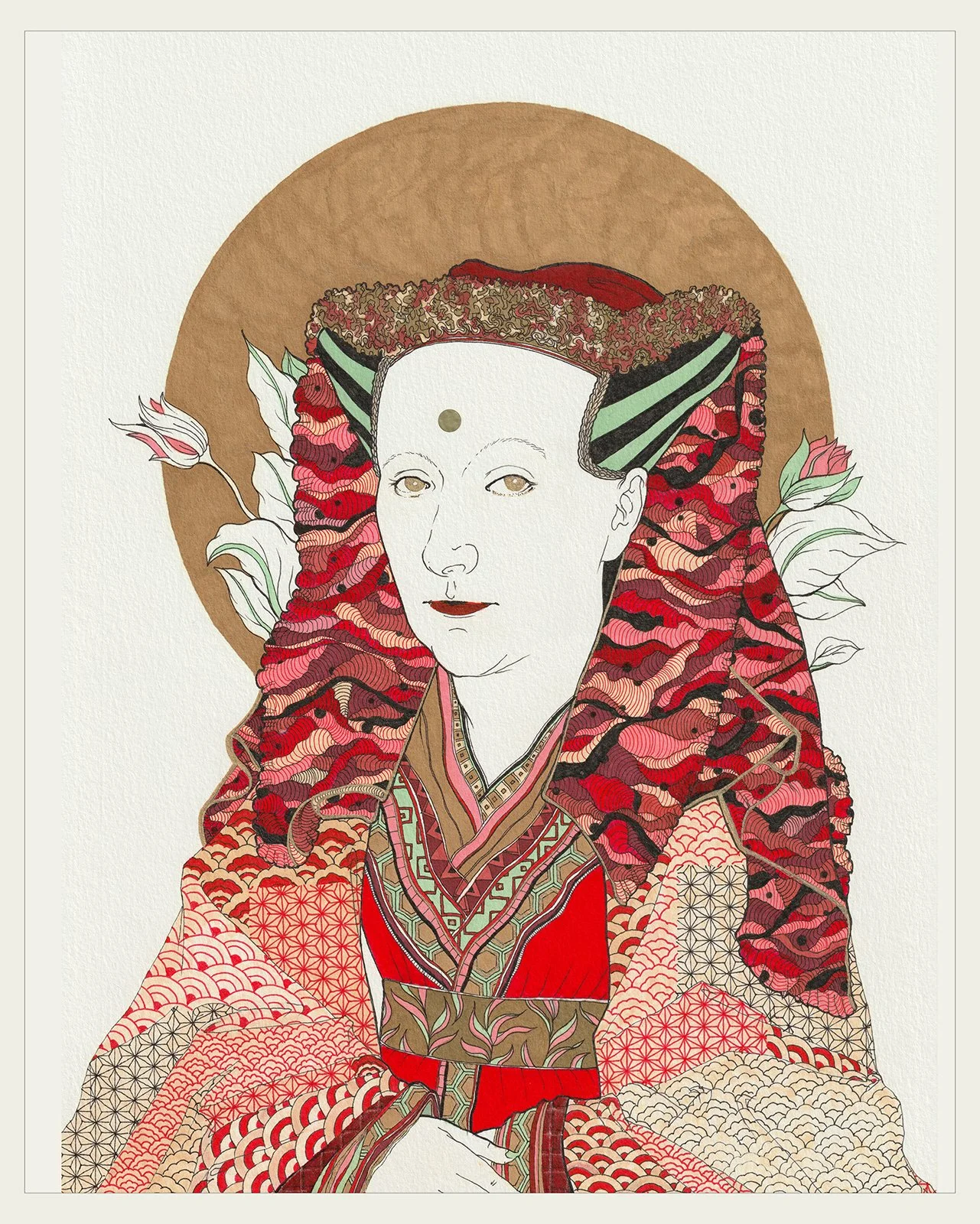
Title: Margaretha- After Jan van Eyck, 1439
Medium: Fineliners, Markers, Golden ink and stickers on paper
Size: 18 x 12
Price: $240.00
Margaretha (a German name derived from the Greek word 'margarítēs' and the Persian 'wārīd,' meaning “pearl”, symbolizing purity and rarity), was a highly educated individual who spoke Latin and other languages, with extensive training in politics, philosophy, and fine arts. She was regarded as equal to men, earning respect as a leader. Her contributions and accomplishments left an indelible legacy that continues to inspire future generations. — [In reality, women of the Renaissance faced limited options, with only three possible paths: nun, wife, or courtesan. Many of the most educated nuns, from aristocratic families, excelled in music, teaching, art, and textiles. They would send them to convents rather than incur the expenses of large dowries. Drawing inspired by “Portrait of Margaret van Eyck”, by Jan van Eyck].
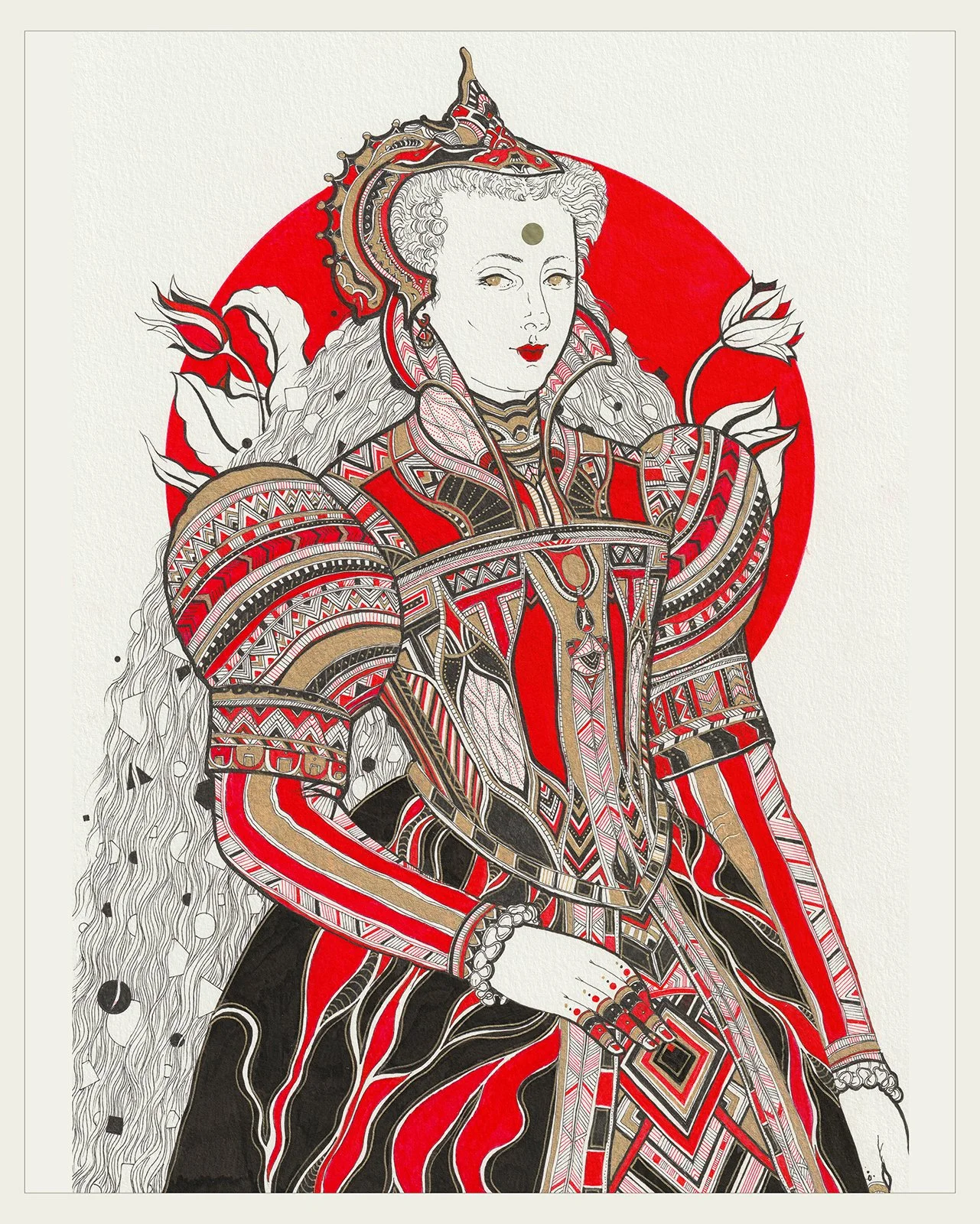
Title: Wilhelmine- After Frans Pourbus II, 1569
Medium: Fineliners, Markers, Golden ink and stickers on paper
Size: 18 x 12
Price: $240.00
Wilhelmine (derived from Wilhelm, meaning “willing to protect”, is a German name that carries a legacy of resilience and loyalty), represented the very ideal of the Renaissance individual—a supremely gifted painter, scientist, inventor, and polymath. With a vast breadth of readings, she was ranked among the most erudite humanists of her era with contributions that continue to inspire and influence the realms of art and science. — [In reality, a Renaissance woman's primary virtues were chastity and motherhood. It is rare in Renaissance art to encounter women features do not adhere to the standards of youthful beauty and societal emphasis on maternal roles. Drawing inspired by “Portrait of a Lady”, by Frans Pourbus II].
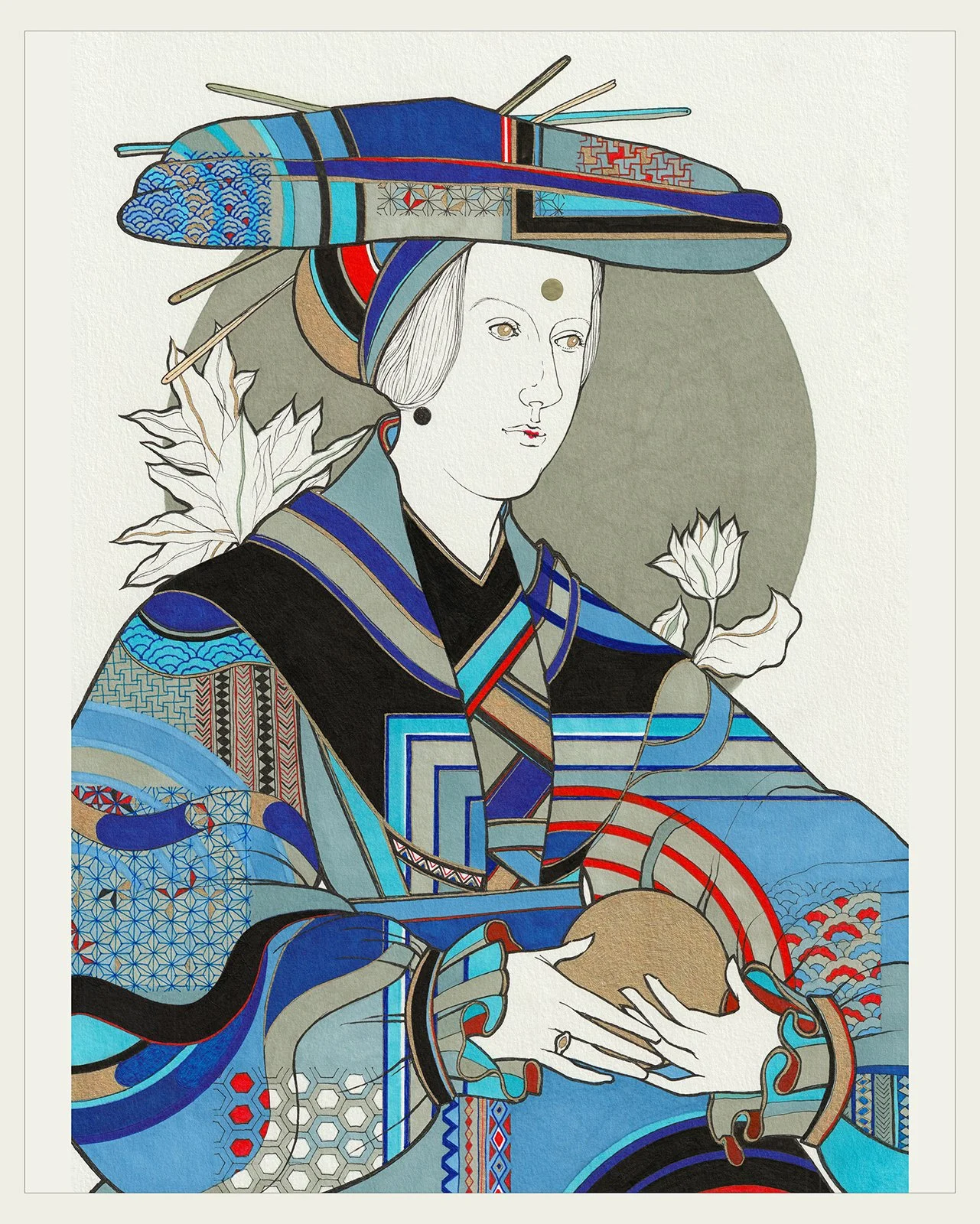
Title: Anna- After Hans Maler zu Schwaz, 1520
Medium: Fineliners, Markers, Golden ink and stickers on paper
Size: 18 x 12
Price: $240.00
Anna (a Hebrew name derived from Hannah, meaning “grace”, symbolizing a timeless virtue), along with being a stateswoman and major patron of the arts, she played a crucial role in encouraging the development of Renaissance humanism through her inner circle of scholars and philosophers. She was an accomplished educator, lawyer, writer, and member of parliament, eventually becoming one of the court most effective and trusted civil servants. — [In reality, women during the Renaissance were often viewed as property, first belonging to their fathers and then to their husbands. Marriages were primarily financial transactions, negotiated to create advantageous business and social alliances for families. Drawing inspired by “Portrait of Queen Anne of Hungary”, painted by Hans Maler zu Schwaz].
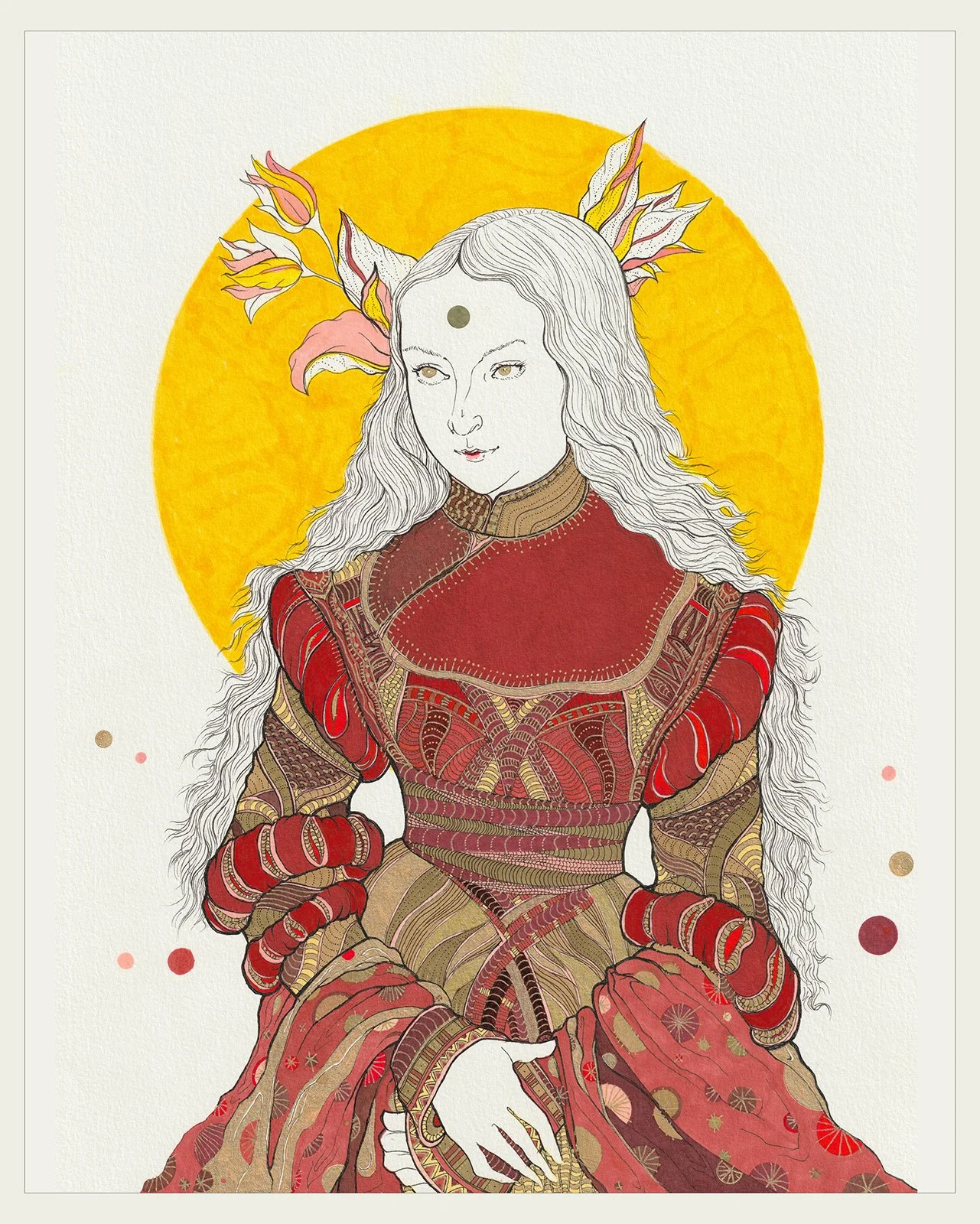
Title: Sibylle- After Lucas Cranach the Elder, 1526
Medium: Fineliners, Markers, Golden ink and stickers on paper
Size: 18 x 12
Price: $240.00
Sibylle (the Greek name from 'sibylla,' meaning “prophetess”, embodies a sense of foresight and intuition), was a formidable political force becoming a masterful politician and diplomat, renowned for her ability to navigate complex political landscapes while also serving as a prominent patron of the arts. Fostering creativity and innovation, she rub shoulders with the most important artists of her era. — [In reality, during the Renaissance, various restrictions limited women's agency, identity, and freedom of movement, suffocating their opportunities outside of designated roles. This societal framework confined women to traditional paths, hindering their potential. Drawing inspired by “Portrait of Princess Sibylle of Cleve”, by the a German painter and printmaker Lucas Cranach the Elder].
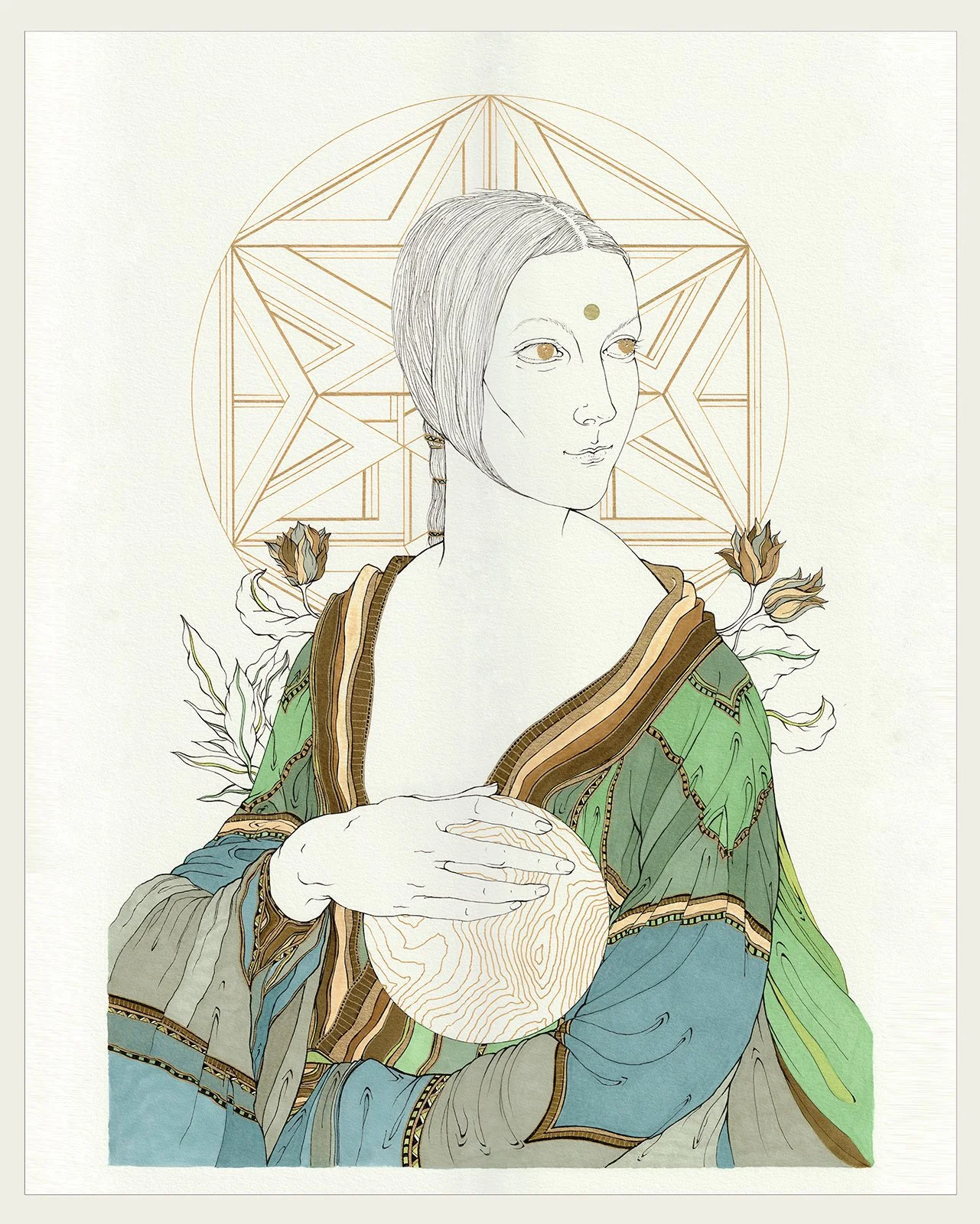
Title: Cecilia- After Leonardo da Vinci, 1489-1491
Medium: Fineliners, Markers, Golden ink and stickers on paper
Size: 24 x 18
Price: $340.00
Cecilia (Latin name derived from the Roman Caecilius, meaning “hidden”, a name suggesting great strength and talent beneath the surface), was a distinguished lawyer, philosopher, and master of many languages, remembered for the sharp worldly wisdom found in her insightful essays. As prolific author and powerful speaker, she urgently advocated for human rights, animal protection, and many other social causes. — [In reality, reputation was a powerful concept during the Renaissance, capable of bringing down an entire house. Women's behaviour determined the family's reputation, while male members were tasked with guarding their innocence. Women were expected to embody modesty and docility. Drawing inspired by Leonardo da Vinci’s “Lady with an Ermine”].
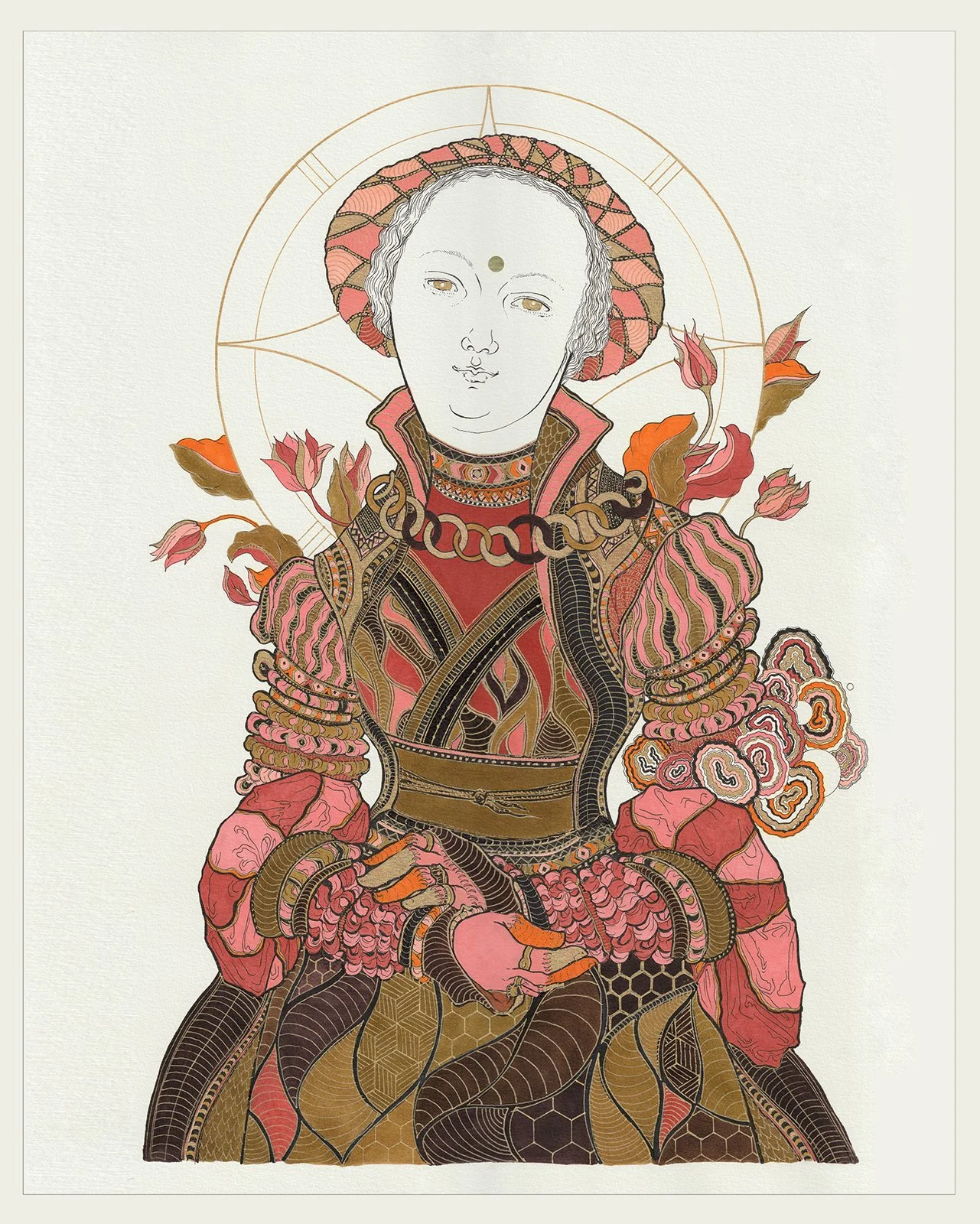
Title: Johanna- After Lucas Cranach the Elder, 1525-1527
Medium: Fineliners, Markers, Golden ink and stickers on paper
Size: 24 x 18
Price: $340.00
Johanna (a Hebrew name derived from Yochanan, meaning “gracious” symbolizing a cherished presence in the lives of others), was a well-known and successful patron who significantly contributed to the development of culture and the arts. She wrote influential treatises and books, co-founded institutions, and actively participated in numerous literary movements. Johanna was also a avid traveler. — [During the Renaissance, in addition to being pious and virtuous, women were also expected to be beautiful. One notable standard included an unnatural hairline, where women frequently plucked or shaved their hair back several inches to create the illusion of a lengthy forehead—a sign of intelligence, youth, and fertility. Drawing inspired by “Portrait of a Woman”, by Lucas Cranach the Elder].